Furnace Installation in Sandy, Utah
Sandy runs from about 4,400 feet at the valley floor up past 5,000 feet near the eastern foothills. That elevation range changes how a furnace has to be sized and tuned.
Our installers run a proper load calculation at your home's actual elevation and verify combustion on the unit after it's running.
Local Installation Considerations in Sandy
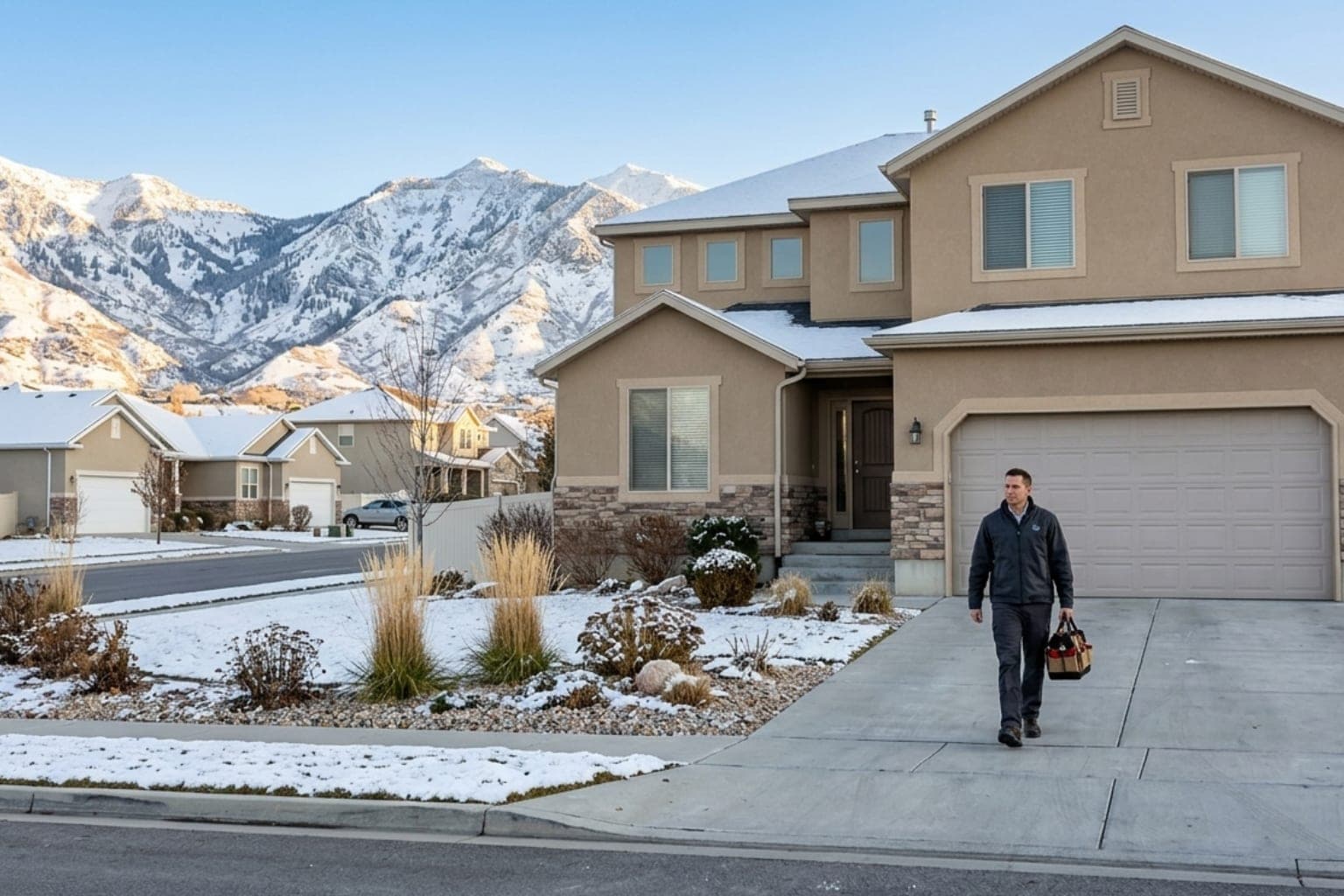
Sandy runs from about 4,400 feet at the valley floor up past 5,000 feet in the eastern foothills. Homes higher up are colder, run longer heating cycles, and need different sizing than valley-floor homes. We size based on your specific home, not a generic BTU-per-square-foot rule of thumb.
What Installation Includes
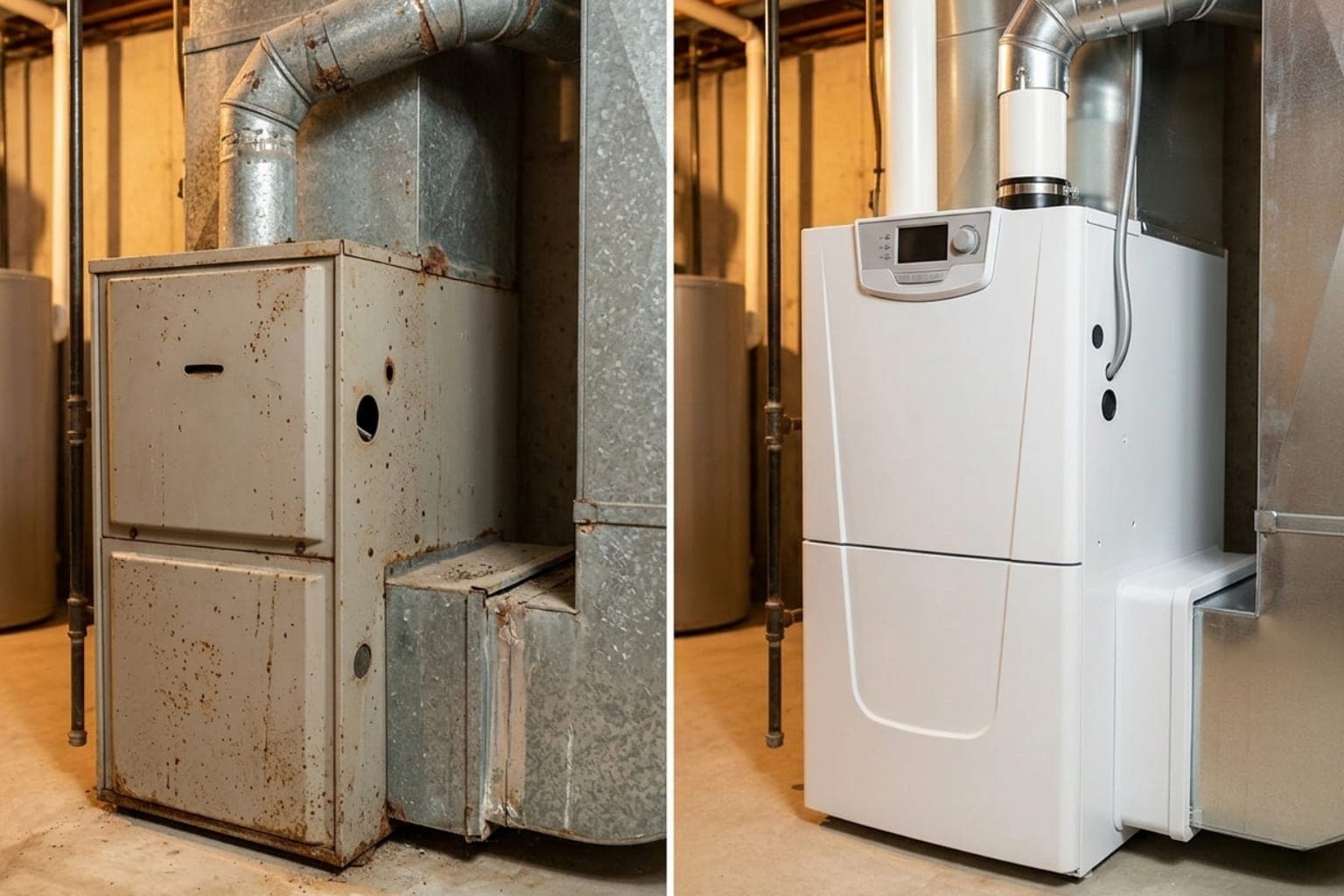
- Manual J load calculation for proper sizing
- Removal and disposal of your old furnace
- Professional installation with code-compliant connections
- Altitude-specific gas pressure calibration
- System testing and combustion analysis
- Warranty registration and post-installation walkthrough
Housing Stock and Heating Patterns in Sandy
Most Sandy replacements look one of two ways.
If your home was built between 1968 and 1992, your original furnace was probably an 80% AFUE upflow. The duct system was sized for that single-stage unit. Upgrading to a modern variable-speed condensing furnace usually means reworking some of the ductwork. The new blowers run at higher static pressure than the old equipment. The original 100-amp electrical service from that era often needs an upgrade too. And the old galvanized B-vent flue typically gets replaced or rerouted to a PVC sidewall vent.
If your home is from the late 1990s or early 2000s, you're probably already on a 90%+ AFUE condensing furnace. That covers Pepperwood second-generation lots, eastern Hidden Valley, Willow Creek infill, Sandy Hills, and Storm Mountain. Those units are now 25 to 35 years old and entering their own replacement window. Second-cycle replacements are usually more straightforward, but we still inspect the ductwork.
Granite is its own category. A lot of those homes run boilers and hydronic floor heat alongside or instead of forced-air, sometimes on propane. That changes the install scope to hydronic distribution, primary-secondary loop pumping, and propane considerations.
Installation Considerations Specific to Sandy
Sandy follows the Utah State Construction Code without local changes. The 2021 I-Codes were effective July 1, 2023 via HB 532. The 2023 NEC took effect July 1, 2024. That means furnace replacement is permit-required. The licensed installer pulls the mechanical permit, does the install to code, and the city inspector signs off after.
Most contractors include the permit fee in the bid. Confirm before signing. Skipping the permit creates problems when you sell the house later and can disqualify you from utility rebates.
If your furnace is from the 1985-1992 era, your AC is probably the same age. Replacing both at the same time shares labor: one permit, one inspection visit, shared electrical work. It also avoids running new high-efficiency equipment with old refrigerant lines on the cooling side. Most of our Sandy bids include this option.
If you're in Pepperwood or another gated community, we'll need the HOA gate code on file before we can dispatch a service truck. Current contractor license-and-insurance documentation also has to be on file. Plan a few extra days for that on your first install with us.
Related Service Depth for Sandy
A few things on this page show up in shorter form on our broader service pages.
For the full altitude calibration walkthrough (orifice derating, manifold pressure, combustion analyzer commissioning), see our gas furnace repair page. It applies city-wide across Sandy's 800-to-900-foot elevation range.
For the full replacement decision, see our furnace replacement page. It covers the 5000 Rule, AFUE-tier comparison, BTU sizing via Manual J, and how to stack Enbridge Gas and Rocky Mountain Power rebates. This Sandy install page covers the city-specific permit framework, gated-community logistics, and AC bundling math that the broader pages don't.
Local Context for Sandy Homeowners
The elevation thing is worth saying twice because it's the most important install consideration unique to Sandy. The same furnace model performs differently at 4,400 feet in Historic Sandy than at 5,100 feet in Pepperwood. Gas pressure tuning, orifice derating, and combustion verification at the actual installed elevation are part of commissioning, not optional QA.
Pepperwood has its own logistics. The 477-acre community sits near the mouth of Little Cottonwood Canyon with about 600 lots, all behind a guard gate. We need HOA gate codes and current contractor insurance on file before dispatch. Exterior modification approvals can affect where we place the sidewall vent on a condensing-furnace conversion.
If you're in one of the 55-plus communities (Crescent Heights, Meridian Heights, Alta View Estates), we often pair furnace replacement with indoor air quality upgrades. Whole-home humidification, MERV 11-13 filtration, and condensate-line sanitation are common adds when you're already replacing the system.
Serving Sandy Neighborhoods
Our partner installers serve all Sandy neighborhoods including Quarry Bend, Pepperwood, Bell Canyon, Alta Canyon.
Zip codes served: 84070, 84090, 84091, 84092, 84093, 84094
Need a Furnace Technician? We'll Match You in Minutes.
Call now or fill out our form to get connected with a licensed, background-checked heating technician in your area. Same-day availability in most locations.
DOPL-Licensed · Same-Day Dispatch · After-Hours Available
Why Homeowners Trust Us
We vet every technician in our network so you don't have to. Here's what sets our partner techs apart.
Licensed & Insured
Every technician in our network is state-licensed, fully insured, and background-checked for your peace of mind.
Same-Day Service
Most service calls are scheduled within 2-4 hours. Emergency dispatch available evenings, weekends, and holidays.
DOPL-Licensed Network
Every technician we connect you with carries an active Utah Division of Professional Licensing (DOPL) HVAC contractor license and full liability insurance. License status is verifiable through the Utah DOPL public lookup.
Transparent Estimates
You receive a written estimate before any work begins. The diagnostic charge is stated up front and rolls into your repair invoice once you approve the work, so there is no separate billing for the visit. No hidden charges, no surprise add-ons after the technician arrives.
What Utah Homeowners Say
Real reviews from homeowners we've connected with trusted local technicians.
“Our furnace died on the coldest night of the year. I called Utah Furnace Repair and they had a licensed tech at our door within 2 hours. He diagnosed the problem, had the part on his truck, and we had heat before bedtime. Incredible service.”
Sarah M.
Salt Lake City, UT
“I was quoted $4,000 by another company for a furnace replacement. Utah Furnace Repair connected me with a tech who found the real issue: a $200 igniter replacement. Honest, skilled, and saved me thousands.”
Mike T.
Sandy, UT
“From the phone call to the finished repair, the whole experience was seamless. The technician was on time, explained everything clearly, and left the work area spotless. I’ll be using this service for all my HVAC needs.”
Jennifer R.
West Valley City, UT
“We needed a new furnace installed in our home in SunCrest. The tech they matched us with was knowledgeable about high-altitude installations and did an outstanding job. Highly recommend.”
David L.
Draper, UT
“Scheduled a fall tune-up through Utah Furnace Repair. The technician was thorough, found a cracked heat exchanger we didn’t know about, and probably saved us from a dangerous situation. So grateful for the quality of their network.”
Lisa K.
Murray, UT
“Fast, professional, and affordable. The tech arrived exactly when they said he would, fixed our furnace in under an hour, and the price was very fair. This is how home services should work.”
Robert H.
Bountiful, UT
Frequently Asked Questions
Service Areas Across Utah
Our network of licensed technicians serves communities throughout the Salt Lake City metro and beyond.
Salt Lake City
Salt Lake County
200,000+ residents
Draper
Salt Lake County
51,000+ residents
West Valley City
Salt Lake County
140,000+ residents
West Jordan
Salt Lake County
116,000+ residents
South Jordan
Salt Lake County
77,000+ residents
Murray
Salt Lake County
50,000+ residents
Midvale
Salt Lake County
35,000+ residents
Taylorsville
Salt Lake County
60,000+ residents
Bountiful
Davis County
44,000+ residents
Layton
Davis County
82,000+ residents
Ogden
Weber County
87,000+ residents
Herriman
Salt Lake County
55,000+ residents
Riverton
Salt Lake County
45,000+ residents