Gas Furnace Repair by Licensed Utah Technicians
Gas furnace issues require certified technicians with specialized training. Our partners are licensed for gas line work, combustion analysis, and safe furnace diagnostics.
Gas Furnace Repair Across the Wasatch Front
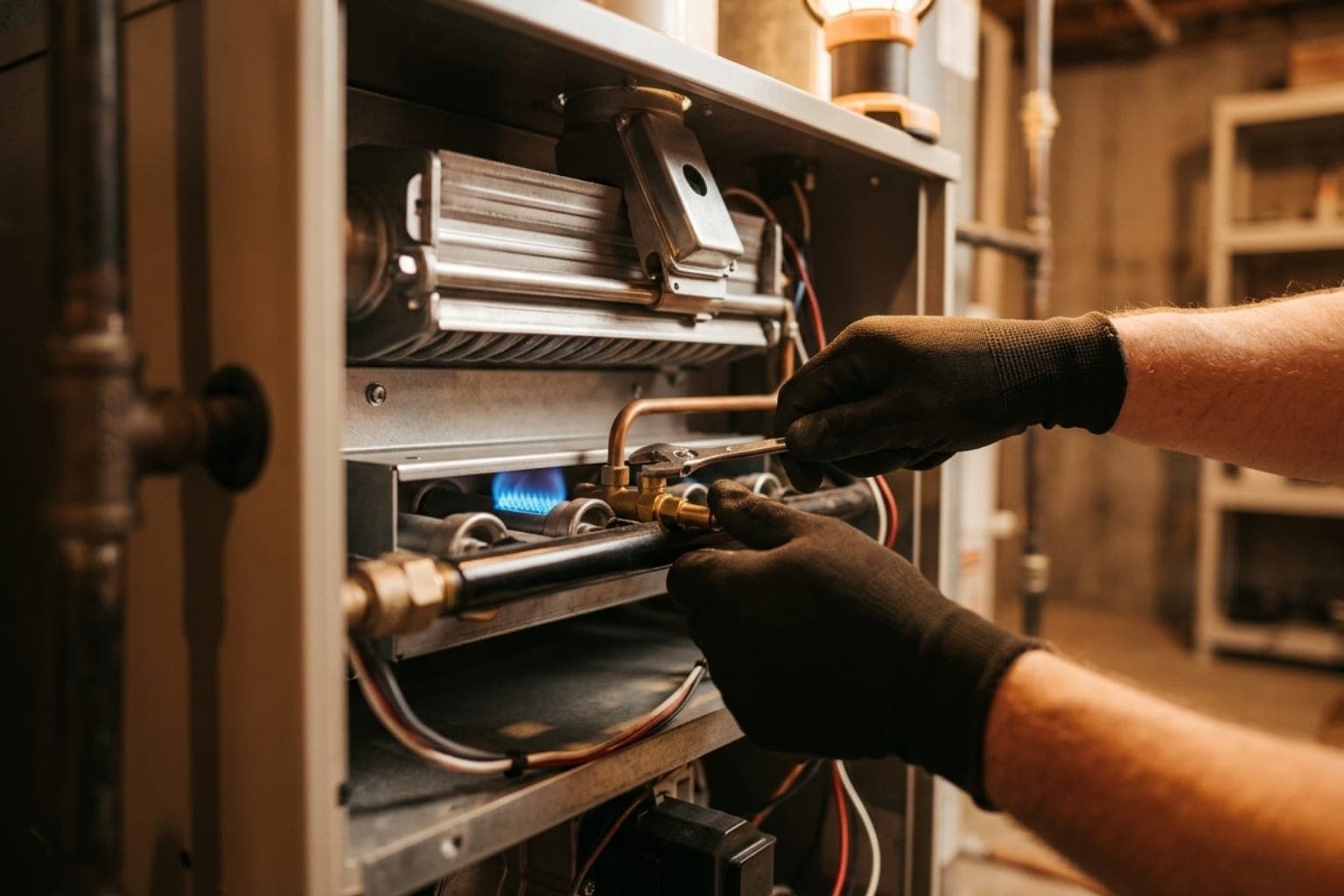
Gas furnaces share parts with electric and hybrid systems, but the problems that bring most service calls are specific to gas equipment: a pilot light that won't stay lit, a gas valve that's degrading, combustion that's drifted out of spec at our altitude, and cracked heat exchangers that can leak carbon monoxide. Our partner network dispatches Utah-licensed HVAC technicians trained on gas combustion safety. Below is what each gas-specific problem actually looks like, what the technician does on arrival, and what the repair typically costs.
Common Gas Furnace Problems
Furnace Won't Light
If your gas furnace won't light, the most common causes are a failed igniter (a small ceramic or metal element that lights the gas, similar to a glow plug in a car), a dirty flame sensor (a thin metal rod that confirms the flame is burning), a closed gas shut-off valve, or a failed control board. Modern furnaces also lock themselves out after three failed ignition attempts as a safety measure, and resetting at the breaker often clears that lockout.
The technician tests the igniter with a multimeter (a working igniter has a specific electrical resistance), cleans the flame sensor with fine emery cloth (oxidation builds up over time and can prevent it from sensing flame), confirms the gas valve is getting electrical power, and reads any diagnostic codes from the furnace's control board. Igniter replacement runs $80 to $200.
Smelling Gas Near the Furnace
If you smell gas right now, stop reading and follow the safety steps on our emergency heating repair page. Evacuate, call Enbridge Gas at 1-800-767-1689 from outside, and call 911 if anyone has symptoms. What follows is what your technician does after the home has been cleared and is safe to enter.
Once the gas utility has cleared the home, the technician finds the leak source using a combustion gas analyzer (a meter that detects natural gas in the air), soap-bubble tests at every gas line fitting (a dab of soapy water bubbles up where gas is escaping), and on suspected in-wall leaks, an infrared camera that picks up the temperature change where gas is escaping. Leaks are classified by severity: immediate hazards (must be fixed before the system can be relit), probable hazards (fixed promptly), and minor non-urgent leaks (monitored). Repair cost depends on the leak location and what fitting needs replacement.
Yellow or Flickering Flames at the Burner
If your burner flames are yellow, flickering, or lifting away from the burner instead of sitting steady on it, the gas-to-air ratio is wrong. Healthy natural gas burns with a steady blue flame, maybe with small yellow tips at the very edge. Solid yellow flames mean the gas isn't burning completely, usually because the burners are dirty, the gas pressure is wrong, the combustion air supply is blocked, or the altitude calibration was never done.
The technician uses a combustion analyzer to measure exactly what's coming out of the flue. Healthy combustion produces specific levels of carbon dioxide and very low carbon monoxide. Yellow flames usually correlate with both readings being out of range. The fix usually involves adjusting the gas pressure, cleaning the burners, and confirming the combustion air supply meets the manufacturer's specs. If yellow flames persist after those adjustments, the next thing to investigate is heat exchanger or venting issues.
Carbon Monoxide Concerns
If your CO alarm has gone off or you suspect your furnace is producing carbon monoxide, the most likely causes are a cracked heat exchanger, a blocked vent, or insufficient combustion air supply. A cracked heat exchanger lets exhaust gases mix with the air your furnace blows through your home. For the safety protocol when a CO alarm sounds, see our emergency heating repair page. The diagnostic side is below.
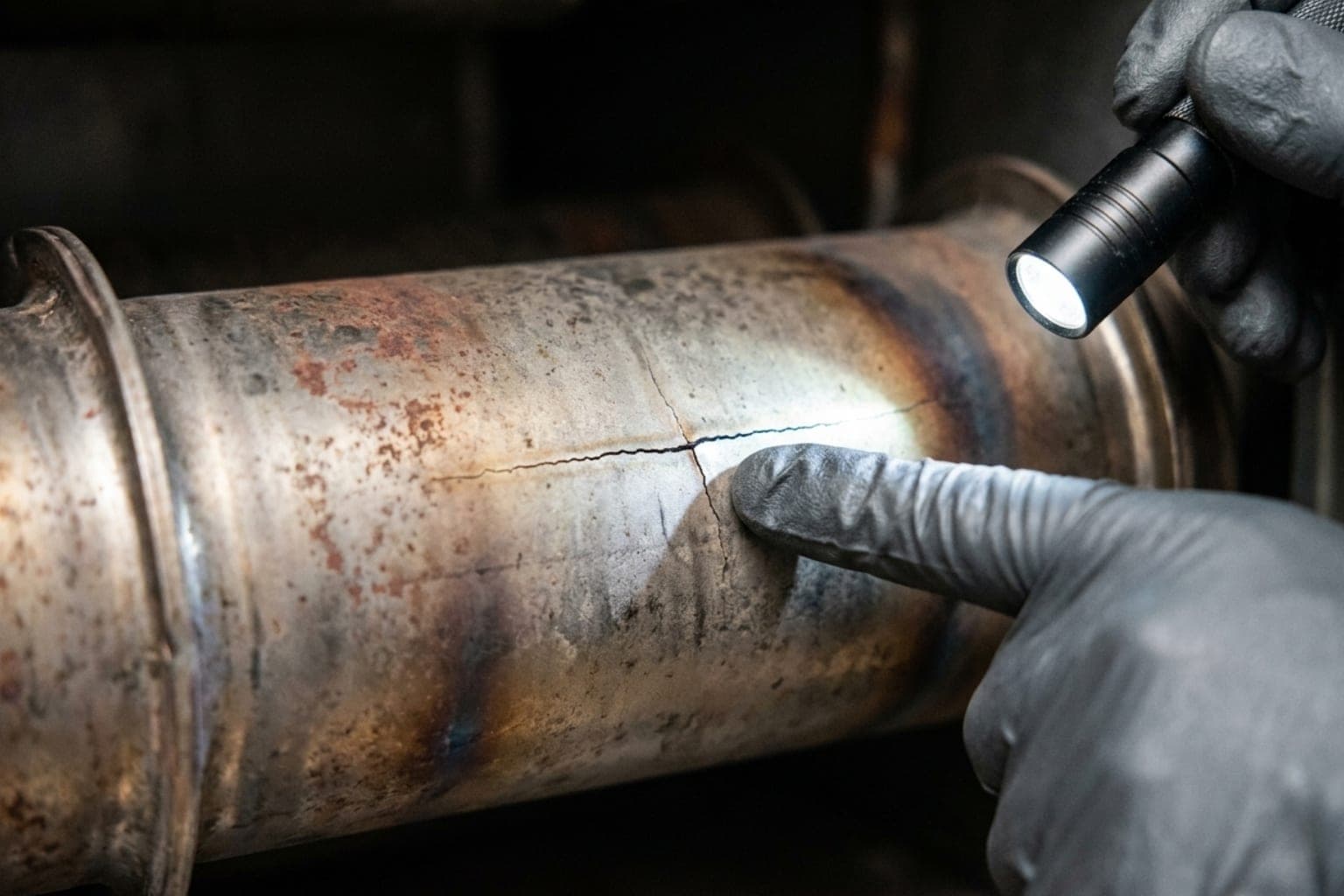
Most heat exchanger cracks don't show up on a flashlight inspection because they only open when the metal heats up and expands. The technician uses several tools instead: a small camera (called a borescope) inserted through the burner ports while the furnace is running, an infrared camera that shows hot or cold spots on the air supply duct, a CO measurement comparison (CO readings shouldn't change when the blower turns on; if they rise, that's evidence of a leak from the heat exchanger to the air supply), and soap-bubble testing on the heat exchanger seams. A cracked heat exchanger is one of the few problems that always means replacement. It's a safety issue regardless of furnace age. Replacement cost runs $1,000 to $3,000.
Pilot Light Won't Stay Lit (On Older Furnaces)
On older furnaces with a standing pilot light (a small flame that stays lit all the time), if the pilot keeps going out the most common causes are a failed thermocouple (a small electrical sensor that confirms the pilot is lit and tells the gas valve to stay open), a dirty pilot orifice (the small opening that meters gas to the pilot), a draft blowing the pilot out, or a failed gas regulator. Modern furnaces don't have standing pilots. They use electronic ignition instead.
The technician tests the thermocouple with a meter while the pilot is lit. A healthy thermocouple produces a tiny amount of voltage (25 to 35 millivolts). Below 18 millivolts, the gas valve loses confidence that the pilot is lit and shuts itself off. Replacement runs $100 to $200 installed.
Cleaning the pilot orifice uses a small wire brush sized to the orifice (using anything bigger would enlarge the hole and change the flame size). Drafts come from two places: leaks in the combustion air supply around the burner area, or downdraft from the chimney itself caused by exhaust fans, weather, or chimney height issues.
For older furnaces with healthy heat exchangers, electronic ignition retrofit kits run $300 to $600 installed. The decision depends on furnace age (15+ years usually favors replacement instead) and fuel-cost economics. The technician walks through the math during the diagnostic visit.
Why Gas Furnaces in Utah Need an Altitude Adjustment
Gas furnaces are factory-tuned for sea level. Utah elevations need that tuning to be redone before the furnace can run cleanly. The Salt Lake Valley floor sits at about 4,265 feet. Bench neighborhoods run 4,500 to 5,500 feet. Park City sits at 6,900 feet. Each elevation needs a slightly different adjustment. Skipping it leads to incomplete burning, soot, early heat exchanger damage, and unsafe carbon monoxide output.
Why Altitude Matters for Burning Gas
Building codes require gas furnaces to be turned down (called a high-altitude derate) by about 4 percent for every 1,000 feet above 2,000 feet of elevation. For Salt Lake Valley homes that's roughly a 9 percent reduction. For Park City and Heber, it's 16 to 20 percent. The math determines what gas pressure to set, what size orifices (small brass nozzles that meter gas to each burner) the furnace needs, and how much combustion air the burners require.
A furnace running at sea-level settings here in Utah is essentially overfiring (too much gas for the thinner air). The visible signs are yellow flame tips that lift off the burners, soot building up on the heat exchanger, and elevated carbon monoxide in the exhaust. The fix isn't a quick orifice swap; it's a verified calibration the technician does using a combustion analyzer.
Adjusting the Gas Pressure for Your Elevation
The technician hooks up a small pressure gauge to the gas valve and reads what pressure the furnace is currently set to. Then they adjust the gas valve regulator (a small screw under a cover on the gas valve) to compensate for our thinner air. Park City installs at 6,900 feet usually need the lowest adjustment in the manufacturer's allowed range. Salt Lake Valley installs at 4,265 feet are closer to the standard setting but still benefit from being verified. The adjustment itself takes about a minute (turning the regulator screw), followed by a combustion analyzer reading to confirm the gas-to-air ratio is correct.
When the Furnace Needs an Orifice Kit Too
Above certain elevations, just adjusting the gas pressure isn't enough. The furnace also needs smaller orifices (the brass nozzles inside that meter gas to each burner). Each manufacturer sets their own altitude threshold for when the kit becomes mandatory:
- Goodman/Amana: kit required above 7,000 ft
- Rheem/Ruud: kit recommended at 5,000 to 8,000 ft, required above 8,000 ft
- Lennox: depends on the model; some require kits at 4,500 ft
- Trane: depends on the model; most require kits at 5,000 ft
Park City and Heber installs almost always need the orifice kit. Salt Lake Valley installs are borderline depending on the brand. The technician confirms the requirement for your specific furnace during the service visit. Kit installation runs $150 to $400.
Verifying the Furnace Is Burning Cleanly
After the gas pressure adjustment and any orifice work, the technician runs a final test with a combustion analyzer (a meter that reads exhaust gases). They insert the probe into the flue, let the furnace run at full output for 5 to 10 minutes, then capture the readings.
Healthy combustion at Utah altitude shows specific levels of carbon dioxide and oxygen, very low carbon monoxide, and a flue temperature within the manufacturer's spec. Readings outside those ranges mean more calibration work is needed. This step is what separates a “set it and hope” service call from a properly verified one. On Park City and Heber furnaces especially, this test often shows that the furnace has been running out of spec for years, and the calibration brings it back to where the manufacturer designed it to operate.
Servicing Gas Furnaces in Older Utah Homes
Many pre-1990 Utah homes (the Avenues, Federal Heights, Sugar House, Holladay, older parts of Bountiful and Ogden) still have furnaces with older ignition systems that work differently from modern designs. Servicing them takes someone who knows older equipment, understands where to find specialty parts, and can give you a straight answer about whether it makes sense to keep repairing or upgrade to a newer system.
Furnaces with Standing Pilot Lights (Pre-1990)
“Standing pilot” means a small flame that stays lit 24/7. It's how most furnaces worked through the late 1980s. The pilot heats the thermocouple, which generates a tiny electrical signal that tells the gas valve it's safe to open the main burners when the thermostat calls for heat.
Diagnostic steps for a pilot light that won't stay lit are covered above. What's different on these older furnaces is parts availability and the bigger-picture question: keep fixing the older system, or retrofit it to electronic ignition (no continuous pilot flame, lights on demand)? That decision depends on the furnace's age, the condition of the heat exchanger, and what you're paying for gas. The technician walks you through that math.
Furnaces from the 1990s with Intermittent Pilot Ignition
1990s furnaces usually use intermittent pilot. The pilot lights only when the thermostat calls for heat, then shuts off afterward. This saves gas compared to a standing pilot, but it adds a small electronic control module that can fail. When something goes wrong, the module flashes diagnostic codes (an LED that blinks a specific pattern, depending on manufacturer) that the technician reads to figure out what part has failed. Common failures: a worn-out spark electrode, an aging capacitor on the control board, or drift in the flame-detection circuit. Module replacement runs $150 to $400 depending on the brand.
Finding Parts for Older Gas Furnaces
Three companies made most of the gas valves in pre-2000 Utah furnaces: Honeywell, White-Rodgers, and Robertshaw. Parts for those older valves are still being made, but you have to source them through specialty HVAC distributors, and they tend to cost more than current-production parts ($250 to $500 for an older gas valve versus $200 to $400 for a new one). Universal thermocouples fit most older systems and are easy to find. Manufacturer-specific pilot orifices and gas regulators sometimes need to be special-ordered. The technician identifies what your furnace needs during the visit and sources from their distributor; same-day parts are common, but specialty items can add a one to two day delay.
Gas Furnace Repair Costs in Utah
Igniter replacement: $80 to $200
Thermocouple replacement: $100 to $200
Gas valve replacement: $200 to $600
Flame sensor cleaning or replacement: $80 to $200
Burner cleaning and adjustment: $100 to $250
Heat exchanger inspection: Included with most service calls
Heat exchanger replacement: $1,000 to $3,000 (often more cost-effective to upgrade the entire furnace; see our furnace replacement page for AFUE-tier comparison and rebate stacking)
Gas pressure adjustment for altitude: $50 to $100 if needed during repair
Costs above cover repair scope. Altitude calibration line adjustments depend on furnace model and elevation; the dispatcher walks you through pricing when you call (801) 421-0175.
How It Works
Getting matched with a trusted furnace technician is simple. Here's how we connect you with the right pro.
Tell Us Your Issue
Call us or fill out the form with details about your furnace problem. Same-day dispatch available.
Get Matched with a Tech
We connect you with a licensed, background-checked technician in your area. Usually within minutes.
Problem Solved
Your technician arrives, diagnoses the issue, and gets your heating system running. Written estimate before any work begins.
Need a Furnace Technician? We'll Match You in Minutes.
Call now or fill out our form to get connected with a licensed, background-checked heating technician in your area. Same-day availability in most locations.
DOPL-Licensed · Same-Day Dispatch · After-Hours Available
Why Homeowners Trust Us
We vet every technician in our network so you don't have to. Here's what sets our partner techs apart.
Licensed & Insured
Every technician in our network is state-licensed, fully insured, and background-checked for your peace of mind.
Same-Day Service
Most service calls are scheduled within 2-4 hours. Emergency dispatch available evenings, weekends, and holidays.
DOPL-Licensed Network
Every technician we connect you with carries an active Utah Division of Professional Licensing (DOPL) HVAC contractor license and full liability insurance. License status is verifiable through the Utah DOPL public lookup.
Transparent Estimates
You receive a written estimate before any work begins. The diagnostic charge is stated up front and rolls into your repair invoice once you approve the work, so there is no separate billing for the visit. No hidden charges, no surprise add-ons after the technician arrives.
What Utah Homeowners Say
Real reviews from homeowners we've connected with trusted local technicians.
“Our furnace died on the coldest night of the year. I called Utah Furnace Repair and they had a licensed tech at our door within 2 hours. He diagnosed the problem, had the part on his truck, and we had heat before bedtime. Incredible service.”
Sarah M.
Salt Lake City, UT
“I was quoted $4,000 by another company for a furnace replacement. Utah Furnace Repair connected me with a tech who found the real issue: a $200 igniter replacement. Honest, skilled, and saved me thousands.”
Mike T.
Sandy, UT
“From the phone call to the finished repair, the whole experience was seamless. The technician was on time, explained everything clearly, and left the work area spotless. I’ll be using this service for all my HVAC needs.”
Jennifer R.
West Valley City, UT
“We needed a new furnace installed in our home in SunCrest. The tech they matched us with was knowledgeable about high-altitude installations and did an outstanding job. Highly recommend.”
David L.
Draper, UT
“Scheduled a fall tune-up through Utah Furnace Repair. The technician was thorough, found a cracked heat exchanger we didn’t know about, and probably saved us from a dangerous situation. So grateful for the quality of their network.”
Lisa K.
Murray, UT
“Fast, professional, and affordable. The tech arrived exactly when they said he would, fixed our furnace in under an hour, and the price was very fair. This is how home services should work.”
Robert H.
Bountiful, UT
Gas Furnace Repair FAQs
Service Areas Across Utah
Our network of licensed technicians serves communities throughout the Salt Lake City metro and beyond.
Salt Lake City
Salt Lake County
200,000+ residents
Sandy
Salt Lake County
96,000+ residents
Draper
Salt Lake County
51,000+ residents
West Valley City
Salt Lake County
140,000+ residents
West Jordan
Salt Lake County
116,000+ residents
South Jordan
Salt Lake County
77,000+ residents
Murray
Salt Lake County
50,000+ residents
Midvale
Salt Lake County
35,000+ residents
Taylorsville
Salt Lake County
60,000+ residents
Bountiful
Davis County
44,000+ residents
Layton
Davis County
82,000+ residents
Ogden
Weber County
87,000+ residents
Herriman
Salt Lake County
55,000+ residents
Riverton
Salt Lake County
45,000+ residents
Other Heating Services
Our network of partner technicians covers all your heating needs.
Furnace Repair
We connect you with licensed, background-checked heating pros in your area. Same-day appointments available.
Learn More →Furnace Installation
Licensed installers across the Wasatch Front. Free in-home estimates with sizing for altitude and ductwork compatibility.
Learn More →Furnace Maintenance
Keep your heating system running efficiently. Our partner techs perform 21-point inspections.
Learn More →Emergency Heating Repair
No heat? We dispatch a licensed technician to your home fast. Available nights, weekends, and holidays.
Learn More →Heater Repair
Gas, electric, or heat pump. Our partner techs handle all heater types. Same-day service across Salt Lake City metro.
Learn More →Heat Pump Repair
Our partner technicians are trained on all major heat pump brands. Diagnosis and repair in one visit.
Learn More →Furnace Replacement
Licensed installers across the Wasatch Front. Right-sized AFUE selection, current ThermWise rebate stacking, and same-day estimates.
Learn More →Boiler Repair
Boilers require specialized knowledge. Our partner techs handle steam, hot water, and radiant systems.
Learn More →