Emergency Furnace Repair: Licensed Technicians Available 24/7
No heat in your Utah home? We dispatch a licensed, background-checked heating technician to you fast. Available nights, weekends, and holidays across the Salt Lake City metro.
Your Furnace Failed. Here Is What Happens Next.
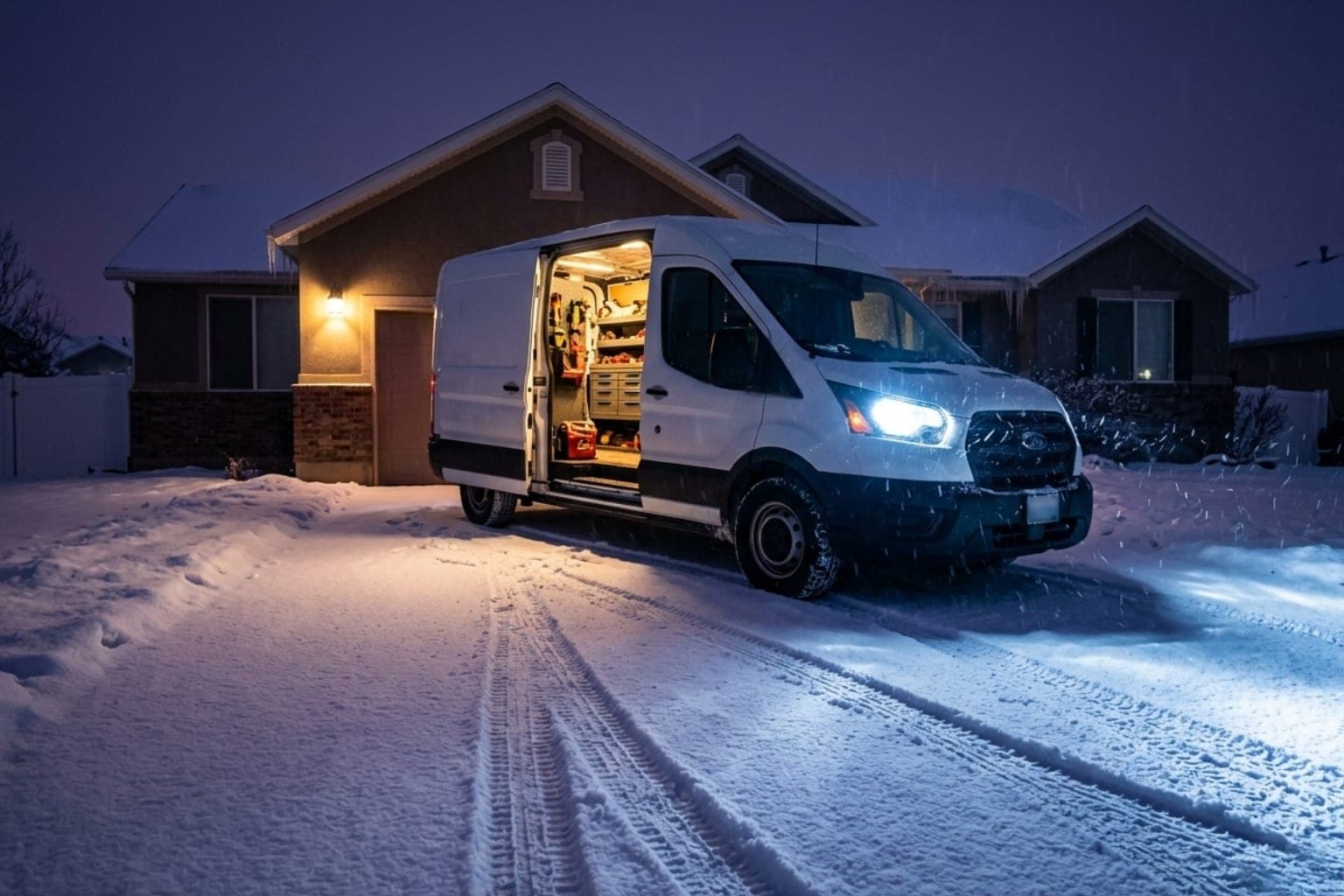
A furnace failure in a Utah winter is not something that can wait until Monday. When overnight temperatures drop below 20 degrees along the Wasatch Front, your home's interior temperature can fall below 50 degrees within three to four hours of losing heat. Pipes can begin to freeze within six to eight hours.
Utah Furnace Repair connects Utah homeowners with licensed local heating technicians for same-day emergency dispatch across Salt Lake City, Davis County, Utah County, and Weber County. Standard response is 2 to 4 hours during normal hours, 4 to 6 hours during peak winter, and longer overnight or on holidays. When you call our emergency line, here is what happens:
You speak with a real person, not a voicemail. We confirm your location and the nature of the emergency. We identify the closest available technician in our network and dispatch them to your home. You receive a confirmation with the technician's name, license information, and estimated arrival time.
When to Call for Emergency Furnace Repair
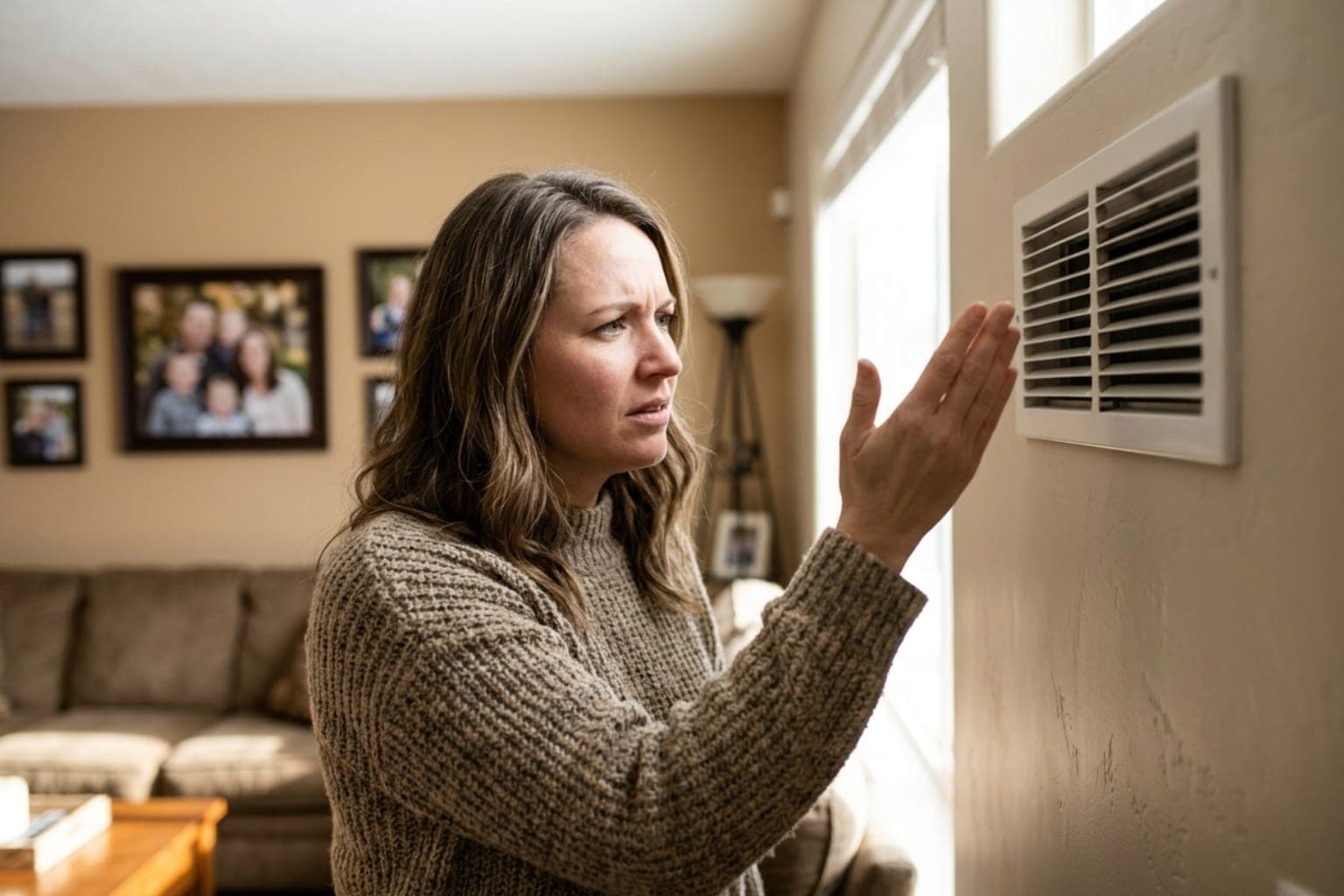
Not every "no heat" call is an emergency. Some are urgent because the house is at risk, residents are vulnerable, or pipes will freeze before morning. Others are inconvenient but can wait overnight. The three cards below help you decide which one you're in. If you're not sure, default to calling: we'd rather hear from you and route to a same-day appointment than have you guess wrong.
Call Immediately If:
These five conditions override the "wait until business hours" default. Each requires immediate action. For two of them, gas smell and CO alarm, the right call is 911 first, then us. We can't help if you're still in the house when it's not safe to be.
- Gas smell or hissing near the furnace. If you smell gas, do not flip switches, do not start the furnace, do not use the phone inside the house. Get everyone outside, then call Enbridge Gas (formerly Dominion Energy) at 1-800-767-1689 from outside. After Enbridge Gas clears the home, call 911 if anyone has symptoms (headache, nausea, dizziness). Once the house is cleared by the utility and emergency services, call us at (801) 421-0175 for furnace inspection.
- CO alarm sounding. Residential CO alarms (UL 2034 standard) sound at 70 ppm sustained for 1 to 4 hours, or at 400 ppm for as little as 4 minutes. Either case is an emergency. Evacuate the house immediately. Call 911 from outside. Do not re-enter to investigate the source or shut off the furnace. Once 911 has cleared the home, call us at (801) 421-0175 to investigate.
- No heat with outdoor temperature at or below 20°F.The Building Research Council at the University of Illinois established 20°F as the temperature alert threshold for pipe freezing. Salt Lake City's ASHRAE 99% heating design temperature is 14°F. If outdoor temps are at or below 20°F and your indoor temperature is dropping, pipe-freeze risk is real and the dispatch window matters. Call now.
- Vulnerable residents in the home. The CDC notes that indoor temperatures of 60 to 65°F can trigger hypothermia in infants, elderly residents, and those with health conditions sensitive to cold. Oxygen-dependent residents and immune-compromised household members face elevated risk during any heating outage. Vulnerable household triage gets priority dispatch. If anyone shows confusion, slurred speech, or shivering they cannot stop, call 911 first.
- Water pooling near the furnace at near-freezing temps.Water pooling at the base of the furnace during cold weather often points to a frozen condensate line on a high-efficiency unit, a cracked heat exchanger, or a humidifier failure. The combination of moisture plus cold creates compounding risk: condensate freezes in the trap and shuts down the system, water reaches electrical components, or the heat exchanger crack worsens with thermal cycling. Don't wait.
Can Wait Until Morning If:
- Your furnace is running but producing less heat than normal
- You have a secondary heat source like a space heater or fireplace to maintain livable temperatures
- The outdoor temperature is above 35 degrees and expected to stay there overnight
Can Wait for a Standard Appointment If:
- Your furnace is working but making unusual noises
- Your energy bills have increased but the furnace still heats your home
- You want a pre-season tune-up or maintenance
5 Checks You Can Do in 15 Minutes Before Calling
These five checks resolve about one in seven emergency furnace calls without dispatch. They take 15 minutes total. Run through them before calling, especially during peak winter when response windows are longer. If all five check out and you're still cold, the technician you reach won't bill you for problems you've already eliminated. If any one of them is the issue, you've saved the dispatch fee and the wait.
1. Thermostat batteries
Most modern thermostats run on AA or 3V batteries even when wired to the furnace. Dead batteries kill the signal that tells the furnace to fire. Pull the thermostat off the wall and check the battery compartment. Fresh batteries cost $3 at any hardware store and resolve a surprising share of "my furnace stopped working" calls. Smart thermostats have backup batteries that drain on the same cycle as the screen: check both the screen and the wired battery slot.
2. Breaker panel
The furnace runs on electricity even when burning gas: the blower, ignition control, and safety circuits all need 120V power. A tripped HVAC breaker shuts everything down. Walk to your breaker panel, find the breaker labeled "Furnace" or "HVAC," and look for one that's flipped to the middle position (between ON and OFF) or fully OFF. Reset by flipping fully OFF, then back to ON. If it trips again immediately, leave it off and call us; there's a short.
3. The furnace switch (it looks like a light switch)
Every Utah furnace has a service switch wired in line with the unit. It's usually mounted on the side of the furnace cabinet or on a wall a few feet away, and it looks identical to a regular light switch. Homeowners flip it off accidentally during basement cleaning, mistake it for a basement light, or have a curious toddler turn it off. If yours is in the OFF position, flip it ON. This is the single most-overlooked emergency call cause.
4. Gas shut-off valve
Your gas line has a quarter-turn shut-off valve at the furnace. The handle is parallel to the pipe when the gas is ON, and perpendicular (90° rotation) when OFF. Someone may have shut it off during summer maintenance, a previous service call, or a plumbing repair on a nearby line. If the valve is perpendicular, turn the handle so it's parallel to the pipe. Wait 30 seconds for gas pressure to stabilize, then check if your furnace fires up normally on the next thermostat cycle.
5. Air filter
A severely clogged filter triggers the furnace's high-limit safety switch. The unit overheats, shuts down to prevent damage, and won't restart until the filter is changed. Pull the filter from its slot, usually behind a door at the air return or at the side of the furnace cabinet. If it's gray, dust-caked, or you can't see through it when held up to a light, replace it. Keep one MERV 11 or MERV 13 filter on hand all winter. Replacement takes 60 seconds and resolves the call entirely if filter overheating was the cause.
If all five check out and you're still cold, call (801) 421-0175. Mention to the dispatcher that you've worked through the five checks. You skip the basic troubleshooting walk-through, and the technician arrives knowing they're not coming for a $3 thermostat battery.
While You Wait: Keep the House Safe
If your furnace has stopped working and a technician is on the way, take these steps to protect your home and stay safe.
Prevent pipe freezing.
Open cabinet doors under kitchen and bathroom sinks to let warm room air circulate around pipes. If temperatures are dropping fast, turn on faucets to a slow drip. Moving water resists freezing.
Consolidate to one room.
Close doors to unused rooms and gather family members in a central room. Use blankets, sleeping bags, and layers. Your body heat in a smaller space helps maintain a livable temperature.
Use secondary heat safely.
If you have a gas fireplace, use it. Electric space heaters work but keep them away from curtains, furniture, and bedding. Never use your oven or gas stove as a heat source. Never bring outdoor propane heaters, charcoal grills, or generators indoors.
Emergency Furnace Repair Costs in Utah
Diagnostic visit: rolled into the repair invoice when you authorize service that same trip. No separate charge once the work is approved. The dispatcher walks you through pricing details when you call.
Common emergency repairs and typical costs:
Igniter replacement: $150 to $300
Failed gas valve: $300 to $600
Blower motor failure: $350 to $700
Thermocouple replacement: $100 to $250
Control board failure: $400 to $800
Is It Really an Emergency? When to Call Now vs. Wait
The 24/7 framing on every Utah HVAC site implies every no-heat call is an emergency. It's not. An overnight call gets you a 4-to-8-hour wait and possibly an after-hours premium; the same call at 8am the next morning gets you 2-to-4-hour standard response. If your situation isn't time-critical, calling at 8am saves you money and gets faster service. Here's how to tell which one you're in.
Call Now (Genuine Emergency)
Three conditions trigger a genuine emergency call regardless of time of day:
- No heat with outdoor temperature at or below 20°F (per Building Research Council pipe-freeze threshold) and no alternative heat available. Indoor temps drop fastest in poorly insulated homes and at high elevations; pipe-freeze risk is real and the dispatch window matters.
- Vulnerable residents in the home (infants, elderly, oxygen-dependent, immune-compromised) and indoor temperature trending below 65°F with no alternative warming available.
- Symptoms of carbon monoxide exposure (headache, nausea, dizziness, confusion) regardless of whether the CO alarm has sounded. Get out of the house, call 911, then call us once the home is cleared.
Same-Day, Not Emergency
These situations are urgent but not emergency. Standard same-day dispatch (2-4 hour response during business hours) handles them without the after-hours premium:
- Furnace running but blowing cool air, with the home still above 60°F.
- Heating works intermittently, with periods of normal operation between failures.
- Forecast is mild (overnight low above 25°F) with no extreme cold incoming.
- Daytime hours (7am to 6pm) on a weekday with the family already awake and the house warm enough to wait through dispatch.
If your situation is in this category, call us first thing in the morning and you'll get faster, cheaper service than calling overnight.
Wait Until Tomorrow
A small set of situations don't even need same-day service. They can wait for a scheduled appointment in the next few days:
- Heat is partially restored after a brief outage and is now working acceptably.
- The issue is intermittent and you can't reproduce it on demand.
- A non-urgent symptom you've been meaning to address (rising energy bills, mild noises, uneven heating) and the heat is currently working.
- You have a safe alternative warming source and no vulnerable residents.
If you're in this category, schedule a standard appointment.
Two Utah-Specific Cases That Change the Math
Two situations come up often enough on Wasatch Front emergency calls that they deserve their own framing. Furnace failures during winter inversions create a stacked risk profile that nobody on a Utah HVAC site addresses honestly. And a "no heat" call during a power outage isn't a furnace problem at all. Both need different responses than the standard emergency dispatch walkthrough.
No Heat During a Wasatch Front Inversion
Per Utah DEQ data, the Wasatch Front averages 5 to 6 multi-day inversion episodes per typical winter and 18 or more days exceeding NAAQS PM2.5 limits. Cache, Salt Lake, and Utah valleys are designated PM2.5 non-attainment areas. A no-heat call during an inversion is two problems stacked: cold inside the house, and PM2.5-saturated air outside that you can't open windows against without making indoor air quality worse.
The blower also stops circulating during a furnace failure, which means whatever filtration you'd normally have during inversion (a MERV 13 filter cabinet, an air purifier on HVAC power) is offline. Vulnerable residents (asthma, COPD, oxygen-dependent, infants, elderly) face the cold and the air quality hit simultaneously. Inversion-cold-snap overlap is treated as priority dispatch when you call. Mention it explicitly so the dispatcher routes you accordingly.
No Heat With a Power Outage
Modern gas furnaces need electricity. The blower, ignition control board, and safety circuits all run on 120V power. If your power is out, your furnace can't fire even though the gas line is fine.
If you're cold and your lights, fridge, and outlets are also dead, this isn't a furnace call. Call Rocky Mountain Power's outage line at 1-877-508-5088 first. Their automated system reports outage status by address. If your area shows an active outage, the fix is on RMP's side, not ours. If RMP shows no outage but you have no power and no heat, the issue is at your panel or the service drop to your house: call an electrician or RMP emergency. If power comes back and the furnace still won't fire, run through the 5-check section above before calling us.
How It Works
Getting matched with a trusted furnace technician is simple. Here's how we connect you with the right pro.
Tell Us Your Issue
Call us or fill out the form with details about your furnace problem. Same-day dispatch available.
Get Matched with a Tech
We connect you with a licensed, background-checked technician in your area. Usually within minutes.
Problem Solved
Your technician arrives, diagnoses the issue, and gets your heating system running. Written estimate before any work begins.
Need a Furnace Technician? We'll Match You in Minutes.
Call now or fill out our form to get connected with a licensed, background-checked heating technician in your area. Same-day availability in most locations.
DOPL-Licensed · Same-Day Dispatch · After-Hours Available
Why Homeowners Trust Us
We vet every technician in our network so you don't have to. Here's what sets our partner techs apart.
Licensed & Insured
Every technician in our network is state-licensed, fully insured, and background-checked for your peace of mind.
Same-Day Service
Most service calls are scheduled within 2-4 hours. Emergency dispatch available evenings, weekends, and holidays.
DOPL-Licensed Network
Every technician we connect you with carries an active Utah Division of Professional Licensing (DOPL) HVAC contractor license and full liability insurance. License status is verifiable through the Utah DOPL public lookup.
Transparent Estimates
You receive a written estimate before any work begins. The diagnostic charge is stated up front and rolls into your repair invoice once you approve the work, so there is no separate billing for the visit. No hidden charges, no surprise add-ons after the technician arrives.
What Utah Homeowners Say
Real reviews from homeowners we've connected with trusted local technicians.
“Our furnace died on the coldest night of the year. I called Utah Furnace Repair and they had a licensed tech at our door within 2 hours. He diagnosed the problem, had the part on his truck, and we had heat before bedtime. Incredible service.”
Sarah M.
Salt Lake City, UT
“I was quoted $4,000 by another company for a furnace replacement. Utah Furnace Repair connected me with a tech who found the real issue: a $200 igniter replacement. Honest, skilled, and saved me thousands.”
Mike T.
Sandy, UT
“From the phone call to the finished repair, the whole experience was seamless. The technician was on time, explained everything clearly, and left the work area spotless. I’ll be using this service for all my HVAC needs.”
Jennifer R.
West Valley City, UT
“We needed a new furnace installed in our home in SunCrest. The tech they matched us with was knowledgeable about high-altitude installations and did an outstanding job. Highly recommend.”
David L.
Draper, UT
“Scheduled a fall tune-up through Utah Furnace Repair. The technician was thorough, found a cracked heat exchanger we didn’t know about, and probably saved us from a dangerous situation. So grateful for the quality of their network.”
Lisa K.
Murray, UT
“Fast, professional, and affordable. The tech arrived exactly when they said he would, fixed our furnace in under an hour, and the price was very fair. This is how home services should work.”
Robert H.
Bountiful, UT
Emergency Heating Repair FAQs
Service Areas Across Utah
Our network of licensed technicians serves communities throughout the Salt Lake City metro and beyond.
Salt Lake City
Salt Lake County
200,000+ residents
Sandy
Salt Lake County
96,000+ residents
Draper
Salt Lake County
51,000+ residents
West Valley City
Salt Lake County
140,000+ residents
West Jordan
Salt Lake County
116,000+ residents
South Jordan
Salt Lake County
77,000+ residents
Murray
Salt Lake County
50,000+ residents
Midvale
Salt Lake County
35,000+ residents
Taylorsville
Salt Lake County
60,000+ residents
Bountiful
Davis County
44,000+ residents
Layton
Davis County
82,000+ residents
Ogden
Weber County
87,000+ residents
Herriman
Salt Lake County
55,000+ residents
Riverton
Salt Lake County
45,000+ residents
Other Heating Services
Our network of partner technicians covers all your heating needs.
Furnace Repair
We connect you with licensed, background-checked heating pros in your area. Same-day appointments available.
Learn More →Furnace Installation
Licensed installers across the Wasatch Front. Free in-home estimates with sizing for altitude and ductwork compatibility.
Learn More →Furnace Maintenance
Keep your heating system running efficiently. Our partner techs perform 21-point inspections.
Learn More →Heater Repair
Gas, electric, or heat pump. Our partner techs handle all heater types. Same-day service across Salt Lake City metro.
Learn More →Heat Pump Repair
Our partner technicians are trained on all major heat pump brands. Diagnosis and repair in one visit.
Learn More →Furnace Replacement
Licensed installers across the Wasatch Front. Right-sized AFUE selection, current ThermWise rebate stacking, and same-day estimates.
Learn More →Gas Furnace Repair
Gas furnace issues require certified technicians. Our partners are licensed for gas line work and furnace diagnostics.
Learn More →Boiler Repair
Boilers require specialized knowledge. Our partner techs handle steam, hot water, and radiant systems.
Learn More →